JACK'S BLOG
|
|
|
1/30/2012 1 Comment The Books of Jack WhyteGood ReadYOU AND I may not be looking for the same things in a story. In other words, the books I like, you may hate. So, let me run it down for you before I attempt to get you all excited about Jack Whyte. 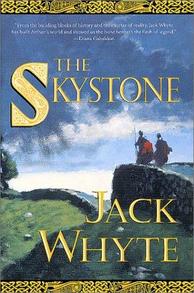 I like three-dimensional characters. I can't drum up much interest in a story if I'm not interested in the characters. My wife and I walked out on Fatal Attraction, a hugely popular movie, because we didn't like the Michael Douglas character and pretty much figured that he deserved whatever happened to him.
I like well-narrated exposition. I want the author's words to transport me to that time and place in which the story is set, much like Michener did in his early works. Hawaii and The Source were great examples. Basic mistakes jar us back to reality and the spell is broken by bad spelling. I'm not too concerned with the literary quality of a book, but basic rules of grammar, spelling, and punctuation should be observed. People who really enjoy books, like me, drift with the story, identifying with the characters and imagining themselves in its milieu. Simple mistakes are speed bumps that simply destroy the mood. Finally, I find it easier to become engrossed in a story when it is believable. Yes, I can accept elves and ogres, especially when they are crafted by a genius such as Tolkien. Unfortunately, few writers are able to engage in believable flights of fantasy and should stick with the real world – the one they live within. That being said, Jack Whyte took a fantasy, the legend of King Arthur, and wove it into the fabric of real history, the fall of the Roman Empire, and created a series of stories that I can recommend enthusiastically and without reservation. He populated them with magnificent heroes, and crafted a sense of time and place that is unparalleled in the genre of historical fiction. As an author working in the same genre, he inspires me. The Camulod Chronicles – yes, Camulod is an actual place, the site of a Roman fort that the author chose as the historical precedent for Camelot – is a series of seven books that must be read in their correct order to fully appreciate the flow of history from the contraction of the Roman Empire to the rise of a society built on the foundations the legionnaires left behind. Jack Whyte breathes life into mythical characters as only a creative genius can. Merlin's spells are simply explained as scientifically sound applications of physics and chemistry that would have seemed magical to primitive peoples. Arthur is a boy raised with the discipline of a legionnaire and a love of the native Britains he is taught to serve as their lord. The author also reveals the myth of Excalibur as a leap in the technology of the weapons of war. He even creates a believable etymology for its name. Indeed, his treatment of Arthur's famous sword is just one example of the details that he infused into his novels to explain the legend without destroying the wonder of it. If you have gotten this far in my tirade, you must now click this link and begin acquiring and reading these books. Oh and when you're done, read his trilogy about the Knights Templar. Good reading.
1 Comment
1/29/2012 4 Comments ¡Vive Granma!CubaNO VEHICLE CAN be animated by the human psyche more vividly than one that swims upon the seas. Aircraft and land vehicles of all types pale in comparison. It may be that just as we gestate swimming in a sea of amniotic fluid, a seagoing vessel touches our souls because it delivers us safely from an unnatural environment; one to which we are destined to emerge but which will remain alien forever after. Thus, the Cuban revolutionaries cling to the Granma, the vessel that delivered the Fidelistas safely from Mexico to Cuba where they mounted a successful insurgency to depose the hated dictator, Fulgencio Batista. 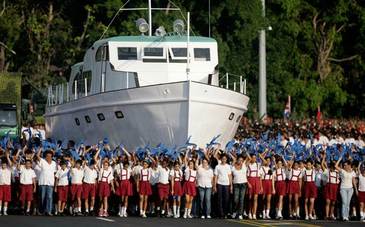 I suppose, too, that the Granma reminds them of the loss of so many of their compañeros. Men who share danger, such as the harrowing sea voyage in a derelict yacht, are forever bound by the experience. Thus, the Granma is a revered memorial to those who died within the first days after they landed.
This bond between men and boat is likewise memorialized in the name of a Province cut from the Oriente of Cuba where they launched their revolution. It is also memorialized in the name of their official party organ. Although the Spanish equivalent of Granma, abuela, could have been substituted, we are left to wonder if these men, born and bred on an island nation, clung to the ancient mariner's superstition that it was bad luck to rename a boat subsequent to its christening. Now, here again, in the 50th anniversary of the Cuban victory at the Bay of Pigs, the Granma joins the celebration as its replica churns through a sea of jubilant children. Looking at the still photo you can almost here the chant. ¡Viva Granma! ¡Viva la revolución! Unfortunately, the Cubans must reignite their revolution. The man who gave birth to it, also killed it. They seem to fail to realize that a bureaucracy now rules in Havana and it perpetuates the human rights violations that Fidel and his Communist compañeros began. 1/28/2012 0 Comments The Books of Frederick MarryatGood ReadI HAVE LONG been a fan of stories of action and adventure on the high seas, especially stories about iron men and wooden ships of the Napoleonic Wars. The Hornblower saga by C. S. Forester and the Jack Aubrey saga by Patrick O'Brian are classics of the genre. 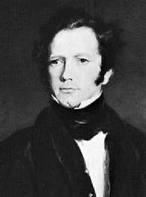 Frederick Marryat Interestingly, both series are based on the real life adventures of Thomas, Lord Cochrane, whose life is found in a free book on Amazon Kindle, The Life of Thomas, Lord Cochrane.
Lord Cochrane's exploits first inspired another British sea captain, Frederick Marryat, who served under Cochrane as a midshipman. Marryat rose to command his own frigate and engaged in more than fifty sea battles during his career. Thus, he knows better than any other author of fiction, the terror and exhilaration of standing on an open deck amid a hail of canon and small arms fire. Marryat focuses on character, much like his contemporary, Charles Dickens. The plots are often fanciful, however, the authenticity of his narrative is unsurpassed. Reading a book by Marryat is like sitting by the fire, surrounded by children, listening to the exploits of an aging great grandfather or uncle. For me, the most pleasurable part of reading a work by Marryat are those times when he lapses into personal recollections in the middle of a story. For example, in one book, the fictional captain performs a wedding at sea, and Marryat wanders off into a tale wherein he performed such a ceremony during one of his commands. I am certain that a critic would be happy to tear apart a work by Marryat, and they are welcome to it. However, I will still read, and sometimes reread, my favorite Marryat books. 1/28/2012 1 Comment Legacy of the NinthGood Read by Paul Anthony The author almost lost me in the first chapter with an errant cultural reference- he confused the Menorah with the Ner Tamid and sustituted "kill" for "murder" in the Commandment. (Yes, I'm that picky.) But, I pressed on and he didn't make any such error thereafter. Boy, am I glad that I did.
I began reading The Legacy of the Ninth thinking that it was a story of the Roman Empire, but was not disappointed when it morphed into present day England where an artifact carried there from the Middle East by the Ninth Legion is uncovered. Its discovery becomes the catalyst for a new battle in the continuing conflict between Arabs and Jews. Paul Anthony populated this story with a host of three-dimensional characters engaged in the conflict from different venues, England, Istanbul, Lebanon, and Israel. One in particular, a British policeman reassigned from undercover work in London to leading Bobbies in Cumbria, faces the daunting task of reigniting pride in a group that has been allowed to languish in mediocrity. This challenge alone would be sufficient foundation for a good story. In The Legacy of the Ninth, it is but one facet of a complex tale with plots within plots. Lastly, I was pleased with the author's style. Thank God, I read it on Kindle and had a copy of the Oxford Dictionary built in to help be with the language (I am American and don't speakEnglish). That aside, Paul Anthony varies his pace, lingering on details to establish the milieu, and racing ahead with action to make it exciting. Yes, I can recommend this one without reservation. 1/28/2012 4 Comments Who Else Is There?Good Read by Philip Catshill This book could become a classic of its genre. I don't say that lightly. I am extremely critical of storytelling, especially in the realm of "whodunnits." All too often they are poorly crafted. My most frequent complaints are conflict arising from stupidity; surprise endings without any logical justification; and, illogical behavior. "Who Else Is There" avoids all of these pitfalls. Indeed, it weaves an intricate labyrinth of plot twists and turns that conclude in a neatly wrapped package of resolution that leaves you to wonder how you missed all the clues that the author scattered along the way, and why you didn't deduct it yourself.
Beyond that, it introduces us to a host of three-dimensional characters living in a well constructed world. The principal protagonist, Mike Newman, was terrifyingly real for me. He suffers from debilities that I narrowly avoided when I had a massive stroke a few years ago. Unfortunately for Mike (and the author as well, I suspect), they were not as lucky as I. The descriptions of Mike's physical limitations and aphasia left me emotionally spent as I realized that I had dodged those bullets only because my stroke occurred within minutes of a well-staffed hospital where my clot was cleared within less than an hour and I recovered fully. The bottom line is that I have already purchased the next installment in the Mike Newman series, "Suffer Little Children" and bumped it to next in my queue of books to be read. 1/28/2012 0 Comments The Sickle's CompassGood Read by Stephen WoodfinI didn't think that I was going to be able to read Sickle's Compass past the first chapter. It left me too emotionally drained. But I persisted and was rewarded with a satisfying though sad tale that made me feel good about humanity and gave me hope that the human spirit to rise to any challenge.
Woody, a World War II veteran and victim of Alzheimer's Disease, is kidnapped by a shadowy character from his past. No one, not his wife, his children, nor the police understand the true nature of Woody's predicament, and they pursue him, his family to rescue him and the police to indict him for crimes they believe he has committed. This is a poignant tale crafted by an author who all too well understands the nature of Alzheimer's and our nation's ignorance of its nature and impact. 1/25/2012 4 Comments CheaspeakeSea ScoutsI WAS REPEATEDLY stunned during the eight years that I skippered a Sea Scout Ship for youth at risk – children incarcerated for crimes – to learn that most lived within a mile or two of the Pacific Ocean and never even seen it. Then again, I wonder how much of the Chesapeake Bay I might not have seen but for Sea Scouting, even though I lived within a few miles of its shores. 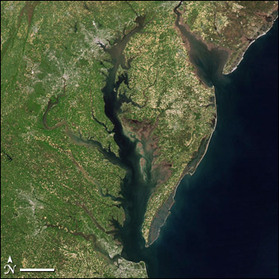 Before I continue my story of Sea Scouting, I must pause to introduce you to the Chesapeake Bay inasmuch as it was the venue of the stories that I will share. It is the largest estuary – a body of water fed by rivers and opening to the sea – in the Continental United States. It was formed over many millennia as rivers draining from the Piedmont Plateau deposited silt to form the Eastern Shore which encompasses parts of Maryland and Virginia and almost the entire state of Delaware. The Chesapeake is undoubtedly the most frightening body of water that I ever sailed. I didn't understand this at first. I grew up there as a sailor and was accustomed to it. However, the bluewater sailors who I met during those years were universally cowed by it. I failed to understand their fear until I too sailed the blue waters of open oceans. Still waters are of little concern to anyone, regardless of where they occur. As hard as it may be for a landlubber to imagine, I have encountered them everywhere, even on the broad oceans of the Atlantic and the Pacific, and the Chesapeake Bay as well. The difference between these oceans and the Bay lies in the aspect of their waves. I have experienced ocean waves that were many times larger than those on the Chesapeake, but none as steep as those on that Bay. Ocean waves grow in interval as they grow in size. That is, the space between them becomes longer and the slope up one side and down the other remains generally uniform. However, waves in the Chesapeake tend to maintain the same interval regardless of their height. Thus, they become steeper as they grow in size. Riding on steeper waves is not only uncomfortable, it is more dangerous. Vessels pitch – tipping fore and aft – and yaw – rolling side to side – more violently on steeper waves. Local boat builders on the Chesapeake compensate by building boats of a uniform length – about 32 to 37 feet. Such a vessel generally sits comfortably on at least two waves under most conditions, thus reducing the violence of the pitching. They build hard chined boats – boats with flat bottoms – to reduce the yaw. Most blue water sailors visit the bay in longer, round bottomed vessels that do not fare as well in the local conditions. These are better suited to the open waters of an ocean. Flat bottomed boats with center boards - projections from the bottom of the boat to prevent leeway or side slipping - are better adapted to shallow waters than the vessels that bluewater sailors rode. Thus, they feared navigating shallow waters of the Chesapeake where depths rarely exceeding a few fathoms. Indeed, there are many places on the Bay that can be negotiated only at high tide. Running aground is rarely a concern in the open ocean unless you approach too close to the shore. Sailing from any point on the West Coast of the United States, you have a thousand feet of water under your keel after progressing little more than a mile from harbor. You may well bump into the shore line in many places on Catalina Island without ever running aground! There is no Continental Shelf off the West Coast as there is on the East Coast.  Blue Crab “Baltimore lay very near the great protein factory of the Chesapeake Bay, and out of the Bay it ate divinely.” – H. L. Mencken Although pollution has greatly diminished its production of seafood in recent years, it was still teeming with life when I sailed there as a Sea Scout. We could stop almost anywhere in the Bay, tie one end of our lines to the gunwale of the boat and toss the other ends over the side with crude weights and scrap meat, and soon harvest a bushel of hard shelled crabs. Wading in the shallows with nothing but a rake, we could harvest a bushel of soft shelled crabs in minutes. The most exciting fishing I ever experienced was in taking stripped bass – we knew them as “Rock” – from the Bay. Good eats, too! Most fished with stout rods and strong lines. I preferred ultralight spinning tackle and 6 pound test line. We trolled for Rock. The faster the boat pulled your lure through the water, the larger the fish you caught. Rock struck the lure like a marlin and “ran” with it like a demon. A three pounder on my rig sometimes required ten or fifteen minutes to “boat.” I never hooked one over seven pounds, but saw many larger ones, up to twenty-five pounds.  Stripped Bass A local brewery released tagged Rock every year, and cash prizes were given to anyone who caught them. A ten thousand dollar prize in those days was a fortune and thousands would be fishing nearby the day that the tagged fish were released.
Although just a little more than two hundred miles in length and averaging just a few miles in width, the Bay has more than three thousand miles of shoreline when the beaches of its tributaries are measured. Thus, a sailor can spend the better part of a lifetime exploring them all. I believe that I sailed on every major river that fed the Bay. James and Elizabeth were named to honor monarchs of the colonial age. Middle and Back bespoke of location. Choptank, Rappahonock, Susquehanna, Patauxent, and Potomac harkened back to the native tribes that once populated the region. Sailing on the Bay was like leafing through the pages of a living book of history. There you have it. My Bay. I left it at age twenty-three and still pine for it these forty-six years later. 1/18/2012 3 Comments Working Hard For A Little FunSea ScoutsSEA SCOUTING in the 1950s was hard work. Seriously, hard work. I didn't get to “ride” on a boat until I had invested at least three months scraping, sanding, caulking, and painting the hulls of four boats – a combined one hundred and twenty-eight feet of hulls from keel to gunwales (where the deck meets the side). Then we had to clean and paint the cabins, and sand and varnish the brightwork (handrails and other natural wood trim). There were brass to polish and engines to service, sails to sew and bilges to clean. As I said, seriously hard work. 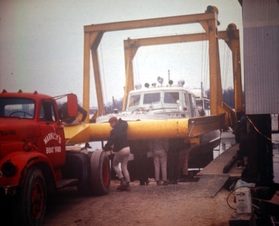 Crashboat being launched There were fewer and ten of us who met regularly each Saturday to work on the boats. I suppose it was my willingness to show up and put in the effort that quickly won me a place in their ranks. For my part, I was thrilled to find people, the skipper and the senior boys, who had the patience to teach me the skills that I needed and frequently complimented my work. That was a unique experience for me.
The Skipper inspected our work product, but the older boys taught me the skills and corrected my mistakes. Thus, I learned to “pass it on” was a key element of Sea Scouting. Almost every skill I learned, I learned from my peers. In turn, I taught those who followed me as I gained experience. It was a lesson that has served me well all my life. How much better would the world be if everyone shared that philosophy. Few of today's Sea Scouts have wooden boats. Most are plastic and they have been deprived of that experience. Indeed, as an adult Sea Scout – I skippered ships for my children and their friends as well as youth-at-risk (gang kids serving time in juvenile detention facilities) I have often wondered how many would hang around if they had to work like we did back then. Unfortunately, they are growing up in a world of entitlements and guarantees. What will happen when society can no longer afford them? Do I sound old and crotchety? Speak up! I can't hear you... 1/11/2012 3 Comments In the beginningSea ScoutsTURNING THIRTEEN WAS a momentous time of my life. It gave me a new source of freedom from my father's abuse when shortly after that celebration, a school chum, Lindsey Fisher, invited me to join the Sea Scouts. I had been a Cub Scout and a Boy Scout, and only recently joined the Explorer Post when the invitation came. Although I had worn my brand new Explorer uniform but once, I was ready to hang it up for Sea Scouting as soon as I learned that it would take me on adventures almost every week, far from home.  I had never heard of the Sea Scouts and quickly learned that almost no one else had ever heard of them either. It was created when the first Boy Scouts outgrew the organization and wanted to continue with the organization. It so happened that one of the adult sponsors of the Boy Scouts in America had a sailing yacht and took these boys for a ride that has continued to this day, one hundred years later. I rode my bike to Lindsey's home. He lived in a community named Stoneleigh, near the elementary school we had attended. From there we rode to the Skipper's house. Adult leaders of Sea Scout Ships are known by that familiar title. There, we squeezed into the Skipper's 1949 DeSoto with another boy of our age, Jim Urch. The older members of the crew – Terry Feelemyer, John White, Bob Cook, and Barry Monaco – piled into Barry's Jeep Wagoneer, and we traveled a confusing maze of highways and byways to Ethel's Boatyard. I couldn't see much hunkered down in the backseat of the DeSoto and felt very overwhelmed. I suppose you may think that I am reading these names from a roster or looking at a picture of them. I'm not. That day and those boys are seared into my memory. Yes, it was that significant an event in my life those fifty-four years ago. 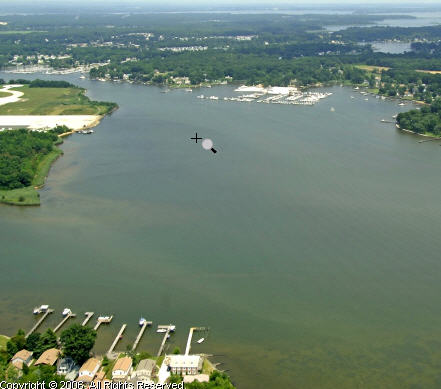 Frog Mortar Creek Today Ethel's was located on Frog Mortar Creek, a muddy tributary of Middle River near Essex, Maryland, near to the Martin Aircraft Plant. In case you missed it, the Martin's plant was an important contributor to America's war effort during WWII. It was so important that they camouflaged it covering the entire facility, including the massive parking lots with camouflage nets. Unfortunately, Middle River and the main line tracks of the Pennsylvania Railroad formed an arrowhead pointing directly to the plant's location and those landmarks couldn't be camouflaged. Even more unfortunately, the camouflage netting collapsed under the weight of snow during its first winter, and workers weren't able to remove their cars until the spring thaw. But, I digress... Ethel was dredging the channel when we arrived. I didn't know her when I first spotted her struggling armpit-deep in the water, probably up to her hips in silt, dragging a large metal bucket with two three-foot long wooden handles out into the creek at the end of her railway boat ramp. When she was satisfied with its position, she waved to the operator on her antique Caterpillar tractor, and he began to drag Ethel and her dredge back to shore with a steel cable that joined them. Keep in mind that this was sometime in April and the water was just thawing from the winter freeze, and Ethel was wearing only coveralls, no footwear and no shirt. Imagine the sight it made for an unworldly fourteen year old boy from the suburbs of Baltimore. 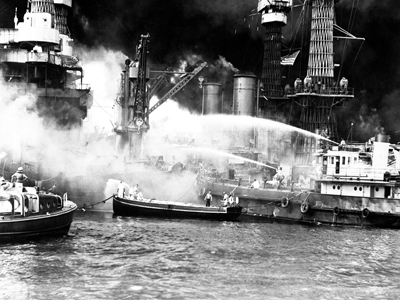 Gig approaching wreckage from left “Our” boats, as I came to know them, included a 35' Captain's Gig, a 24' Seaplane Tender, and a 27' sloop, all wooden, all Navy Surplus. The Captain's Gig would be familiar to anyone who has ever looked at photos taken at Pearl Harbor just after the Japanese attack on December 7th. Boats like it can be seen hovering near the sunken and burning ships, their crews fishing injured sailors from the oil slick waters. The Seaplane Tender was an open personnel carrier with a bench seat along either side to carry passengers to and from float planes. The sloop was previously used at the United States Naval Academy to train midshipmen in the art of sailing. All were on loan to us from the Navy. They liked us in those days. Not so much after the Vietnam War. (I'll talk more of that in later postings.) 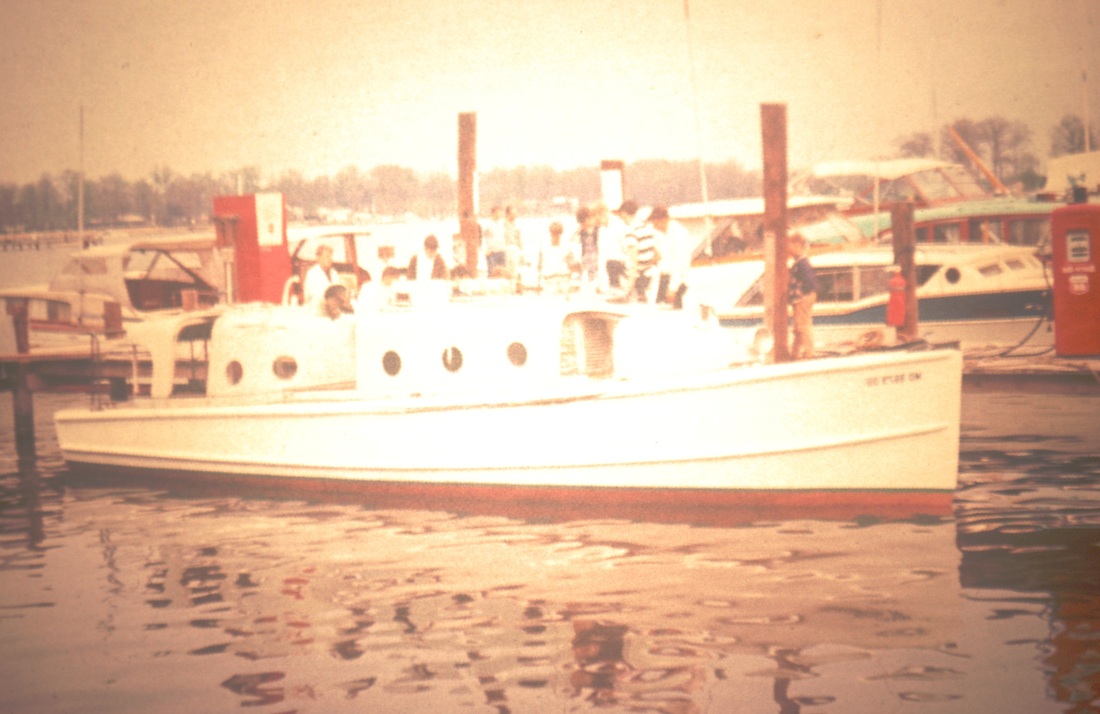 Sea Scout Gig Later in the day, after doing a little scrapping and painting, we took a ride to the Baltimore Yacht Club on Sue Creek, at the confluence of Middle River and the Chesapeake Bay, where our boats would join the rest of our “fleet.” Here I was introduced to our flagship, a 42' Crash Boat, used to retrieve downed fliers from the English Channel during WWII. Interestingly, while researching and writing Rebels on the Mountain, I learned that Fidel Castro had attempted to purchase a crash boat just like ours to transport his men from Mexico to Cuba. Unfortunately for him, he had to settle for the Granma, a vastly inferior, though slightly larger cabin cruiser. 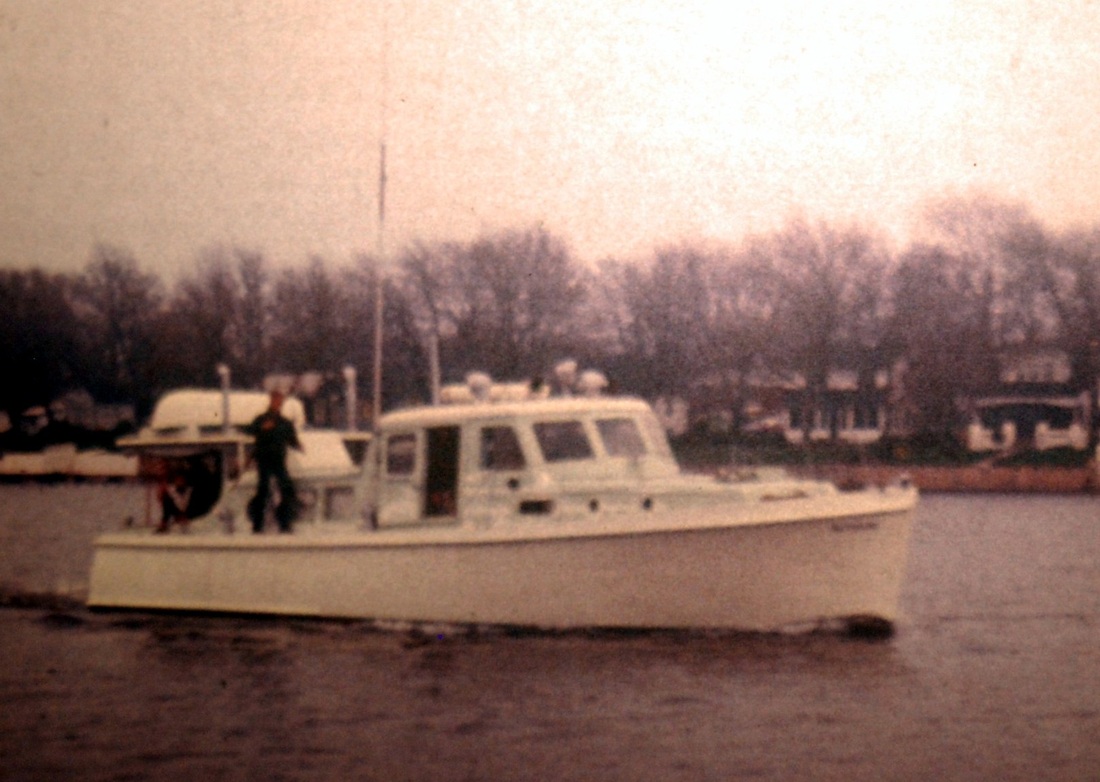 Sea Scout Crashboat I will never forget that day and those people until my dying breath. It was the beginning of an adventure that taught me that I wasn't the lazy misanthrope and coward that my father claimed as my lot in life. It introduced me to men who became my surrogate fathers, who prized my efforts and accomplishments. It made me a member of a crew that included older boys who became my friends, upperclassmen who elevated my lowly status a peg above the other high school freshmen. It taught me skills that served me well all my life. Why else do you think I am writing this?
1/8/2012 1 Comment A Timeline of SimilaritiesCubaAN ACQUAINTANCE OF mine kept a “Map of Clones” on the wall of his office. He placed a pin in each of two cities bearing the same name and stretched a length of yarn between them. I have often considered doing the same thing with a timeline, joining points in history, events and people, that appear similar in my estimation. If I did, I would begin by connecting two historical persons to Ernesto “Ché” Guevara. 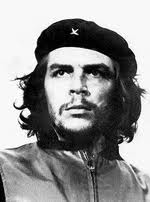 Ernesto "Che" Guevara I would begin with John Paul Jones. Ché and John Paul (that was his real name – he appended Jones while on the lam from British authorities for a murder he committed before the American Revolution), both fought in their respective revolutions as outsiders. They pronounced themselves to be “citizens of the world.” Both were inspired by hatred: Ché hated American capitalists and John Paul hated the British as most Scots of his day hated them as their conquerors.
Both men participated in major battles that marked the end of hostilities in their respective revolutions. John Paul's victory over a British man 'o war in sight of spectators watching from the cliffs of England's shoreline, sent members of parliament scrambling back to their chambers to demand that their government sue for peace. Similarly, the capture of Santa Clara by Ché's column of revolutionary forces sent a message to the dictator, Fulgencio Batista, that it was time to flee into exile. However, this is not a perfect comparison. Whereas Ché never evinced any great skill as a military leader, John Paul's seamanship and tactical leadership were decisive in the battle between the HMS Serapis and the Bon Homme Richard, as well as many other great battles. The end of warfare in their respective revolutions did not quench their thirst for their enemies' blood. Both sought to continue their fights irrespective of their sponsors' wishes. Ché continued fighting anyone who opposed his dream of bringing the blessings of Communism to the Cuban people. Even loyal Fidelistas who had fought at his side to depose Batista, were forced to flee to sanctuary in Miami to escape Ché's wrath. John Paul was promised a new frigate, the America, under construction at the end of the American Revolution, and he dreamed of setting once again to sea to harry the British, treaties be damned. In the end, the benefactors of both men were forced to constrain the revolutionary zeal of their “heroes”. Washington and Jefferson, arranged for the frigate America to be delivered to the French in repayment of their support during the Revolution. They mollified John Paul by arranging a new assignment for him, to command the Black Sea fleet of Catherine the Great of Russia, purportedly so that he could thus become qualified to return as an admiral and command a new American fleet. Castro sent Ché to South America to foment revolution there and murder more capitalists. Neither man lived to return to their promised rewards. Both were betrayed by their benefactors because both threatened the peace that their new nations needed to establish themselves. The remains of both were returned from distant shores after their death, to become objects of veneration by future generations though neither ever made an effort to become a citizen of the lands for which the fought. I would place another pin in that time line at the point in history occupied by Barrack Obama and connect it to Ché. I am not suggesting, of course, that President Obama is a murdering thug. However, both he and Ché were driven by ideology when those around them wrestled with mere politics. Both men rose to positions of power by their innate charisma where they might reshape their nations according to that ideology. Interestingly, agents for both men used the same image, that of a handsome young man looking towards some distant horizon with a fervor that inspires us to turn our heads and look with them, straining to see a future free of want and blessed with equality. Neither proved capable of fulfilling that promise, at least not yet. Thus, I begin building my “Timeline of Clones.” |
|
Copyright © 2000, 2001, 2002, 2003, 2004, 2005, 2006, 2007, 2008, 2009, 2010, 2011, 2012, 2013, 2014, 2015, 2016, 2017, 2018, 2019, 2020, 2021, 2022 Jack Durish All rights reserved
|
Web Hosting by iPage
|