JACK'S BLOG
|
|
Good ReadI DISCOVERED THE CIVIL WAR in 1958 while in the eleventh grade of high school at Towson, Maryland. I suspect that the schools there danced around the subject for fear of offending their constituencies. Generally, the city of Baltimore was largely populated with the descendants of German immigrants who had earned passage to America by fighting for the Union, and the children of African slaves who had fled north after being freed from plantations in the deep south. The Maryland countryside surrounding Baltimore was largely populated by the descendants of rebels. Remember, Maryland was a slave-owning plantation state until the war ended, home of Harriet Tubman and Frederick Douglas, both born into slavery on Maryland plantations. Any teacher who dared broach the subject was bound to run afoul of someone's sensibilities. 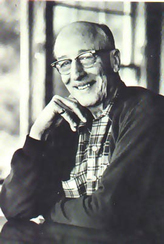 Bruce Catton I was well familiar with the Revolutionary War. We had studied it a great length. And, as someone who shared a birthday with George Washington, I was born to study him. However, as a sailor, most of my attention went to John Paul Jones and the naval engagements that ultimately decided the outcome of the Revolution. (Huh? Sorry, that's another story.) Of course, when I discovered the Civil War, my attention went to the nautical side of it. I began with a nine-volume dissertation on The Naval Engagement of the Civil War. I made models of the Monitor and Virginia (no, not the Merrimack) to illustrate my class project about that famous battle. One of my greatest surprises came when I discovered that the founding editor of my favorite magazine, American Heritage, Bruce Catton, was writing some of the best stories about the Civil War. Catton wasn't an academic historian. He was a journalist. He had grown up listening to aging veterans telling stories of the Civil War and that's how he wrote it, as a story. Too many (almost all) academics “teach” history. They make it a dull and tiresome thing full of dates and places and other mundane details that murder any interest a student might have. Fortunately, I am self-taught and my interest in history only grew, especially when it was nurtured by storytellers of Catton's caliber. It's interesting to compare Catton's work with that of Jeff Shaara. Shaara also tells stories, vastly interesting stories, including several good ones about the Civil War. However, he used fiction to help illuminate the personalities while Catton limited himself to documented fact. I suppose that is what makes Catton's achievements so much more remarkable.
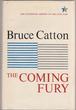
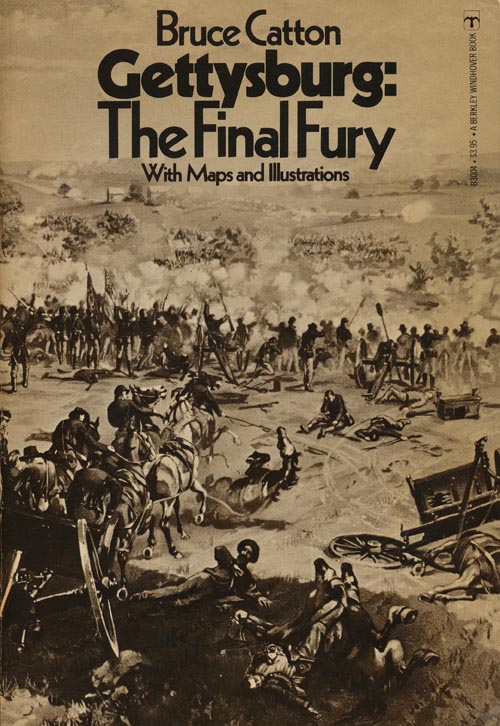
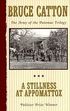
If you can read just three of Catton's twenty-one books, let me point you in the right direction: The Coming Fury, Gettysburg: The Final Fury, and A Stillness at Appomattox. Don't just read them to learn history. Read them to learn a good story.
The most recent issue of American Heritage, and sadly, possibly one of its last, contains a tribute to Bruce Catton, wherein they say, “Catton almost always wrote about the Civil War with a sense of the epic.” I can only add that it is a great shame that he never taught educators how to teach history properly, as a good story – our story.
2 Comments
6/4/2012 01:30:24 am
If a historian can't tell a good story, then the story shouldn't be told or the historian should stop writing. I'm glad you gave us "Rebels on the Mountain." You have proven that a historian can indeed tell a great story. 6/4/2012 03:05:03 pm
I always wondered why teachers of history didn't see that they were basically storytellers, but they repeatedly did and bored the bloody hell out of me. Your comment will be posted after it is approved.
Leave a Reply. |
|
Copyright © 2000, 2001, 2002, 2003, 2004, 2005, 2006, 2007, 2008, 2009, 2010, 2011, 2012, 2013, 2014, 2015, 2016, 2017, 2018, 2019, 2020, 2021, 2022 Jack Durish All rights reserved
|
Web Hosting by iPage
|